🇫🇷 Paris
Palace of Versailles
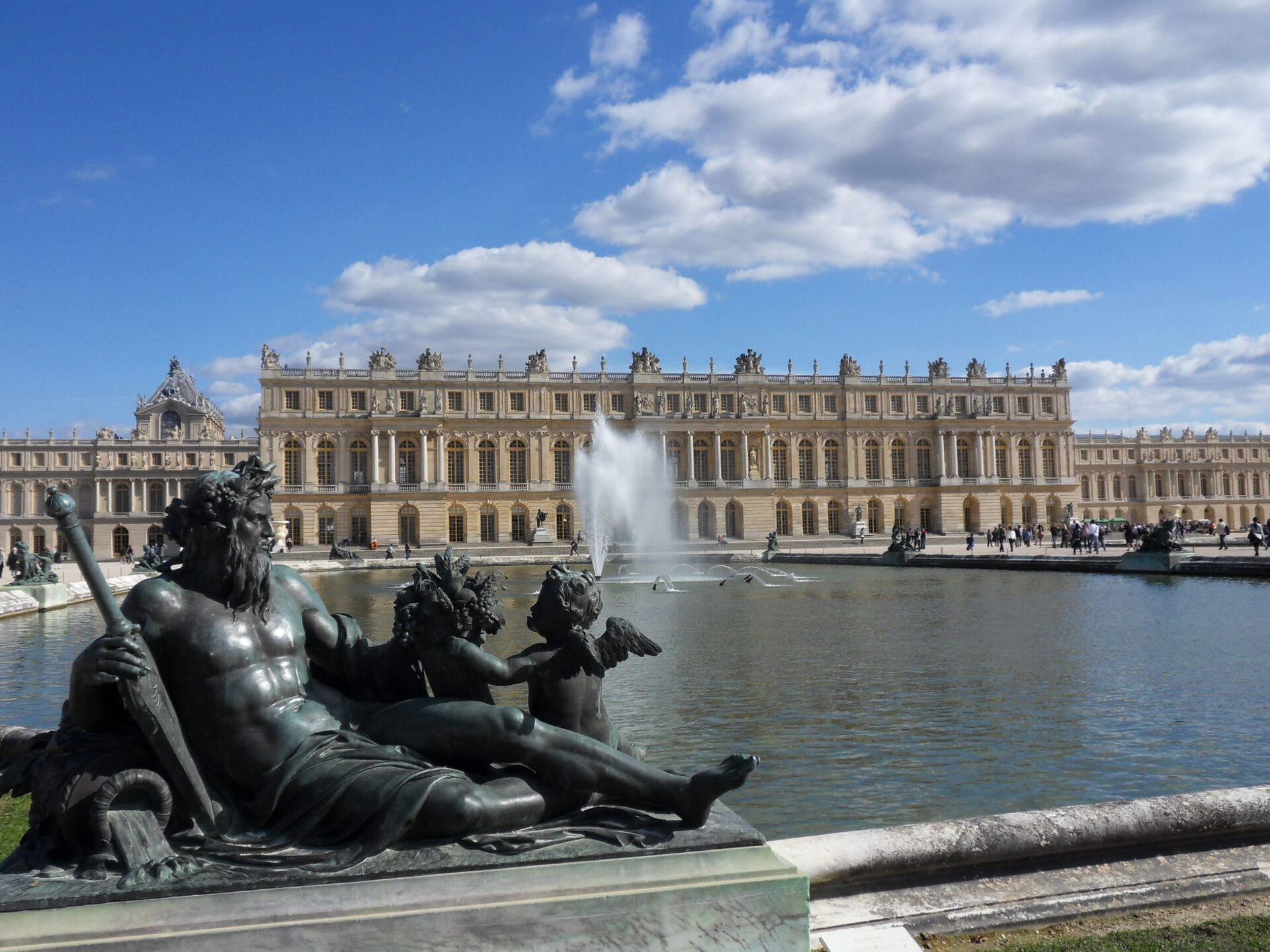
Building it consumed an estimated 5% of France's national budget at its peak. The debt outlasted Louis XIV and helped tip France into revolution.
The palace that bankrupted France. The Hall of Mirrors is the must-see room — 17 arched mirrors facing 17 windows toward the gardens, where the Treaty of Versailles was signed in 1919.
The gardens are enormous and free to walk (except on Fountain Show days). A little rented golf cart or the small train help cover ground.
Visiting on a Musical Gardens day
Most Tuesdays through Fridays from late spring to early fall are Musical Gardens days at Versailles — period Baroque music is piped through hidden speakers all over the gardens. Lully, Charpentier, Rameau, Couperin — the composers Louis XIV actually listened to as he walked these paths. The Sun King personally commissioned much of it. Wandering with the soundtrack going is the closest thing to time-travel Versailles offers.
This is not the same as the Musical Fountains Show (Sat/Sun) where every fountain on the estate fires in choreographed jets — those YouTube clips of dancing water. Musical Gardens days mean the big fountains stay mostly still. The trade-off is worth it:
- The bosquets open up. Versailles' famous "outdoor garden rooms" — each tucked behind 15-foot sculpted hedges with its own theme. Closed to the public on normal days; open on Musical Gardens days. Worth seeking out:
- Bosquet de la Salle de Bal (Ballroom Grove) — a sunken open-air amphitheater of seashells, coral, and gilded lead. Louis XIV held dances and ballets here.
- Bosquet de la Colonnade — a perfect circle of 32 pink-and-white marble columns by Mansart, with a sculpted Pluto abducting Proserpina at the center. The most architecturally elegant of the groves.
- Bosquet des Bains d'Apollon (Apollo Baths Grove) — a rocky artificial grotto sheltering carved-marble Apollo attended by nymphs, and his horses being groomed by tritons. 1670s sculpture, dramatic setting.
- Bosquet de l'Encelade (Encelade Grove) — a gilded sculpture of the Titan Enceladus crushed under rocks of Mount Etna. When the fountain runs, a 25-metre jet of water shoots from his mouth — the tallest at Versailles.
- Bosquet de la Reine (Queen's Grove) — densely planted with rare exotic trees (sequoias, magnolias, cedars). Built on the site of the older Labyrinth bosquet, demolished in 1775.
- Bosquet des Trois Fontaines (Three Fountains Grove) — three terraced basins descending a small slope, with fountains in each. Lost for centuries, restored in 2004.
- Bosquet des Dômes (Domes Grove) — a quieter walled grove with low marble balustrades, white statuary, and bas-relief panels of military trophies.
- Way fewer people. Weekend fountain-show days draw 30,000+ visitors; weekdays are calm by comparison.
- A small fountain finale sometimes runs in the late afternoon (historically ~5:30 PM at the Neptune Basin). Worth checking the day's schedule on arrival.
The Passport ticket is valid for one entry to the gardens during Musical Gardens — do the gardens as one continuous visit, not in and out between other things.
The Queen's Hamlet (Hameau de la Reine) — at the far end of the Trianon estate, Marie Antoinette's miniature working farm village: a dozen thatched-roof rustic cottages around a pond, where she played at being a milkmaid away from court. Tiny, weird, beautiful, and totally unlike anything else at Versailles. The Passport ticket covers Trianon entry; reach the Hamlet via the petit train (~€8 round-trip) or walk ~25 minutes through the gardens.
In the gift shop: "Jouons à Versailles"
The official Versailles gift shop (Aile des Ministres Nord, in the palace itself) sells "Jouons à Versailles" — an €8 deck of 30 game cards designed to play during the visit. Draw a card anywhere on the estate: observation challenges, riddles, mimes, "find this in the Hall of Mirrors" tasks, all set at the court of the Sun King. Ages 5 to 95, 2 to 30 players — scales well for a group of any size. Take turns at your own pace wherever you are in the château or gardens. Cheap, portable, and turns a long visit into a shared game.
Catch the RER C train from central Paris — it terminates at Versailles Château–Rive Gauche, a 10-minute walk from the palace gate.
Watch: The Rise and Fall of Versailles — a three-part BBC drama-documentary on the kings who built it, the courtiers who lived in it, and the revolution that brought it down.
Audio tour: Rick Steves' free Versailles Palace Tour is in the library too, downloadable for offline use as you walk the State Apartments.