Czechia
A thousand years of being at the crossroads of empires — and outlasting all of them.
Read more
Charles IV — when Prague was the capital of an empire
1316-1378How a half-Czech king turned a regional town into the largest, most cultured city in central Europe — and built half the things tourists come to see today.
The Hussites and the Thirty Years' War
1402-1648How an argument about church reform in Prague turned into a century of European bloodshed — and why Czechia ended up the most atheist country in Europe.
From the library
All Prague library →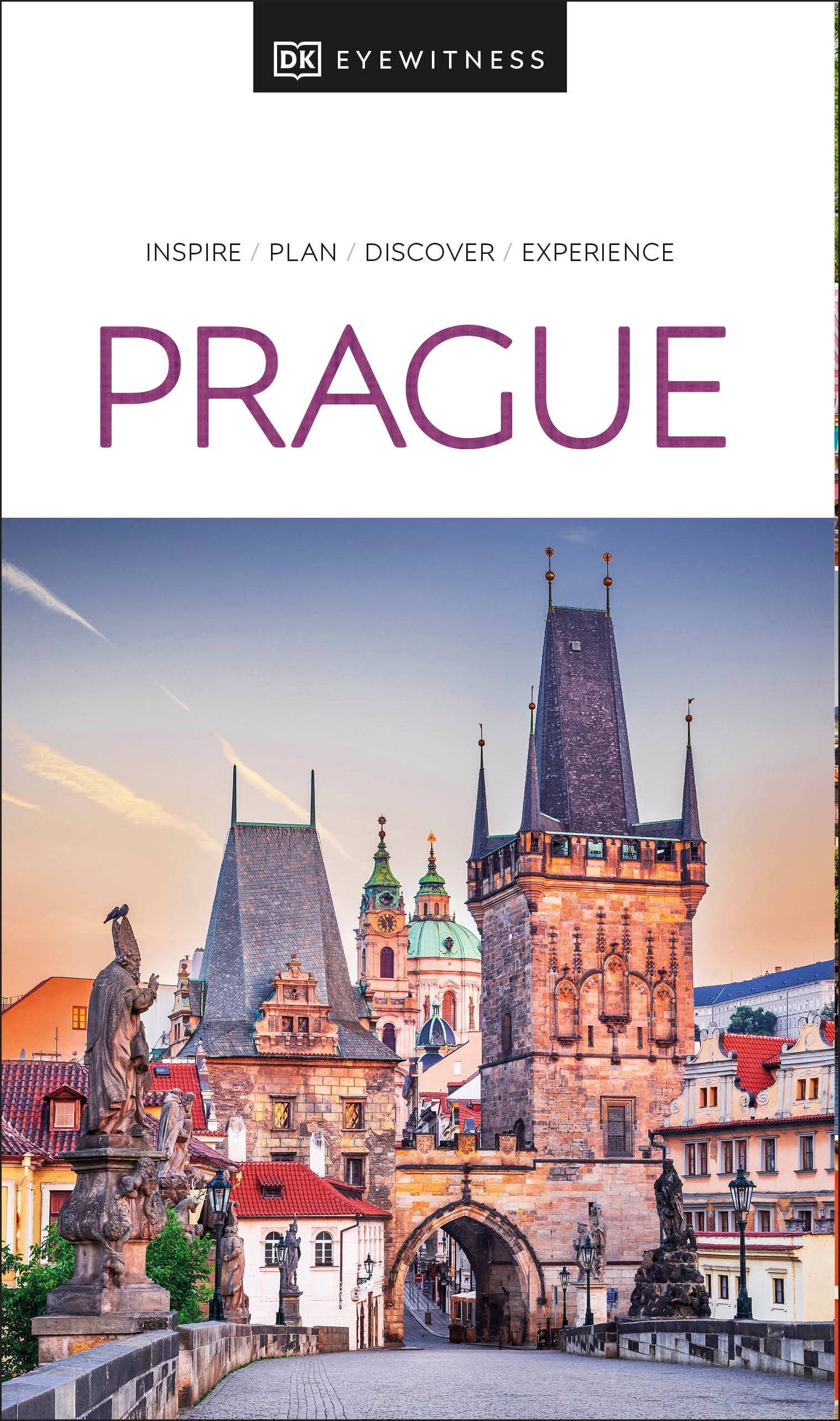
Quick facts (11)
Czechia is among the most secular countries in the world. About 70% of Czechs claim no religion — a legacy of both Hussite history and 40 years of communist rule.
The Czech priest Jan Hus was burned at the stake for heresy in 1415 — more than a century before Martin Luther's Reformation. His martyrdom sparked the Hussite Wars and made him a Czech national hero.
Hus, a popular preacher and rector of Charles University in Prague, attacked the wealth and corruption of the Catholic Church, preached in Czech rather than Latin, and demanded that the laity receive both bread and wine at communion (a privilege the church reserved for clergy). Promised safe conduct, he travelled to the Council of Constance to defend himself — and was arrested, tried, and burned anyway. His death enraged Bohemia. The Hussite Wars (1419-1434) saw an outnumbered army of Czech reformers defeat five papal crusades, partly by inventing armoured war-wagons mounted with early firearms. Hus's portrait still hangs in Czech schools.
The original pale lager — pilsner — was brewed in the Czech town of Plzeň in 1842. Roughly nine in ten beers brewed worldwide today are descendants of that one recipe.
The townspeople of Plzeň were so fed up with the inconsistent, often spoiled beer their local brewers were making that in 1838 they publicly poured 36 barrels of it into the gutter. They built a new municipal brewery and hired a Bavarian brewmaster, Josef Groll, who combined the new lager-yeast bottom-fermentation technique with light-malted Moravian barley and the soft Plzeň water. The result, first served October 5, 1842, was a clear, golden, refreshingly bitter beer unlike anything that had existed before. Pretty much every pale lager you've ever drunk is its great-great-grandchild.
In 1968, Czechoslovakia tried to reform communism from within — "socialism with a human face." The Soviet Union responded by sending tanks into Prague and ending the experiment in eight months.
Under reformer Alexander Dubček, Czechoslovakia lifted censorship, allowed political debate, and proposed a federal restructuring of the state. The Kremlin, terrified of losing control of its bloc, sent over 250,000 Warsaw Pact troops into Czechoslovakia on the night of August 20-21, 1968. There was no organized military resistance, but ordinary Czechs and Slovaks confused the invading soldiers by tearing down street signs, painting tanks with swastikas, and arguing with the soldiers about why they'd come. The reforms were rolled back; a generation of disillusionment set in that helped fuel the Velvet Revolution two decades later.
Czechoslovakia's transition from communism in 1989 took about six weeks of mostly-peaceful protest. They called it the Velvet Revolution because of how smooth it was.
It began on November 17, 1989, when riot police beat a peaceful student march in Prague. Mass demonstrations followed — half a million people in Wenceslas Square — and a general strike. Within six weeks the Communist government had resigned, dissident playwright Václav Havel was president, and a new government was forming. No one had been killed in the revolution itself. Three years later, Czechoslovakia split peacefully into Czechia and Slovakia in what was dubbed the Velvet Divorce — by parliamentary agreement, no referendum, no violence.
Prague Castle is the largest ancient castle complex in the world by area — about 70,000 square metres (nearly 18 acres). It has been a seat of power since around 880 AD.
"Castle" almost undersells it — it's effectively a fortified district, a city within the city, containing palaces, churches (including St. Vitus Cathedral), gardens, and government offices. It has been continuously inhabited and rebuilt for over 1,100 years, with each era leaving its layer: Romanesque, Gothic, Renaissance, Baroque, and modern. It remains the official residence of the Czech president.
The foundation stone of Prague's Charles Bridge was laid at 5:31 AM on 9 July 1357 — a palindromic moment chosen by court astrologers: 1-3-5-7-9-7-5-3-1.
Emperor Charles IV was deeply interested in astrology. His court astrologers picked the moment for the foundation stone to align planetary positions and produce a beautiful symmetric number: year 1357, month 7, day 9, hour 5, minute 31 — reads 1-3-5-7-9-7-5-3-1 forwards and backwards. The bridge took about 50 years to complete and stood as Prague's only Vltava crossing for nearly 500 years.
Prague has thrown officials out of windows at least three times in its history. The most famous one — 1618 — started the Thirty Years' War.
In May 1618, Bohemian Protestant nobles, furious at the Catholic Habsburg emperor for cracking down on their religious rights, tossed two imperial governors and a secretary out a window of Prague Castle. They fell roughly 21 metres. All three survived — Catholic accounts said angels caught them, Protestant accounts said they landed in a dung heap. The incident triggered the Bohemian Revolt, which escalated into the Thirty Years' War that devastated central Europe and killed an estimated 20% of the population of the German lands. There were two earlier defenestrations in 1419 and 1483; not surprisingly, "defenestration" is a word Prague gave the world.
Prague's Old Jewish Cemetery — used 1439 to 1787 — holds an estimated 100,000 burials stacked up to 12 layers deep. The community simply ran out of space.
Forbidden by city laws from expanding the cemetery, Prague's Jewish community piled fresh earth on top and buried again — and again — over more than 300 years. Roughly 12,000 gravestones lean against each other at the surface, tilted by the shifting soil; the dead beneath them are far more numerous. The most-visited stone belongs to Rabbi Judah Loew (d. 1609), the scholar associated with the legend of the Golem of Prague.
Prague's astronomical clock, the Orloj, has been telling time on the Old Town Hall since 1410. It's the oldest astronomical clock in the world still in operation.
The clock shows three things at once: the time, the position of the sun and moon against the zodiac, and the day of the medieval calendar. The famous walking figures of the Apostles — and Death striking the hour with a bell — were added in 1490 by master clockmaker Hanuš. There's a popular legend that the Prague councillors blinded Hanuš so he could never build another like it; the story is a 19th-century invention. The clock was nearly destroyed in May 1945 when retreating Nazi forces shelled the Old Town Hall; it took eight years to restore.
Construction of Prague's St. Vitus Cathedral started in 1344 and finished in 1929. That's 585 years.
Work began under Charles IV with a French master mason, then continued under Peter Parler whose distinctive Gothic style still dominates the cathedral. After Parler's death the project lost steam, then the Hussite Wars (1419-1434) shut work down for centuries. The cathedral stood unfinished — with a temporary wall sealing the nave — until a 19th-century national revival movement raised funds to complete it. The west façade was finished in 1929, six centuries after the foundation was dug.