France
Revolutions, kings, cathedrals, and a 1,300-year argument about who gets to be in charge.
Read more
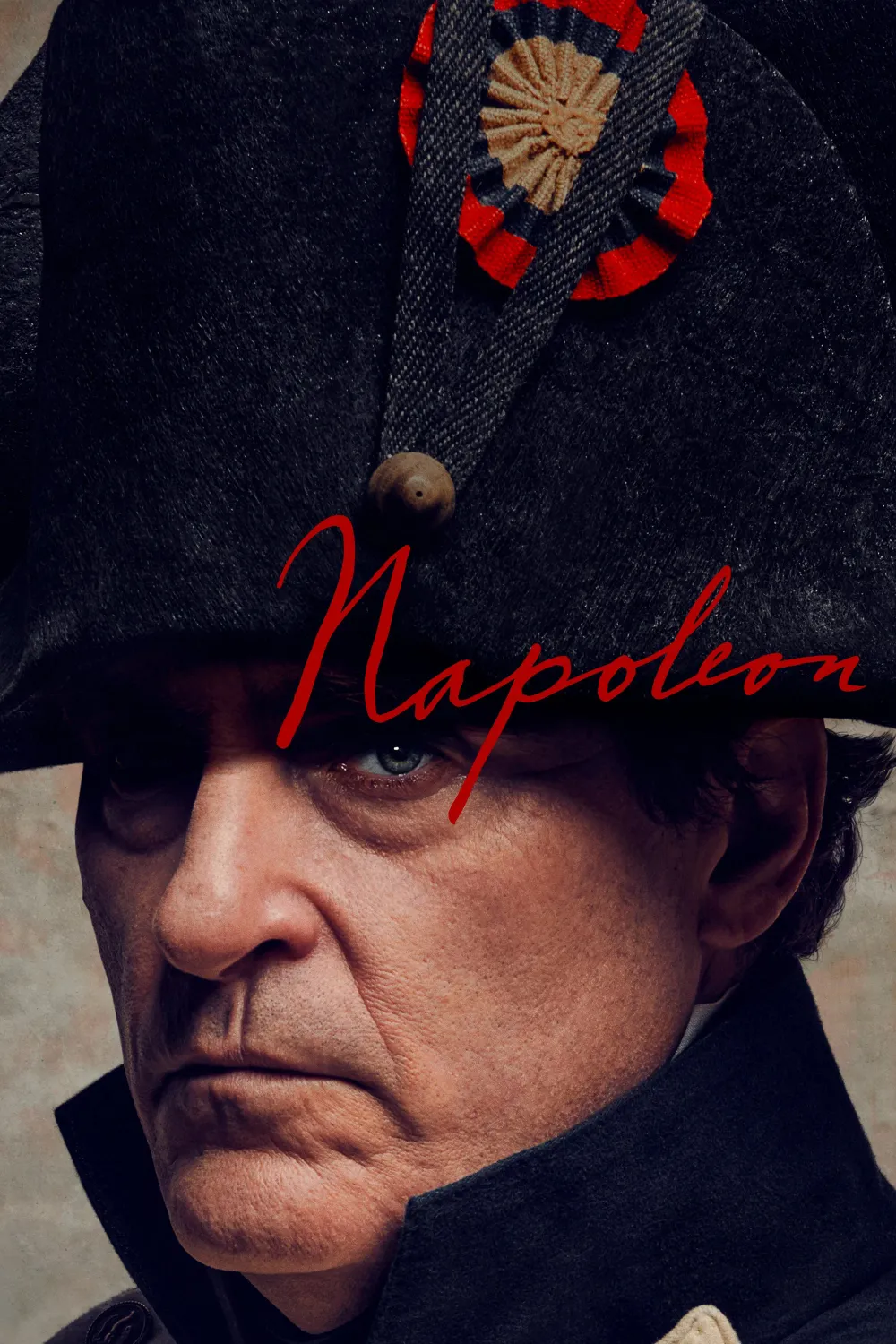
Napoleon
1769-1821A Corsican artillery officer who ended the French Revolution by joining it, conquered most of Europe, lost it all, and changed the law codes still used by a third of humanity.
Notre-Dame in eight centuries
1163-2024A construction site for two hundred years, a victim of revolution, a national symbol saved by a novel, a witness to coronations and one near-disaster too many.
The French Revolution
1789-1799Ten years that ended a thousand-year monarchy, invented modern politics, and turned on the people who started it.
From the library
All Paris library →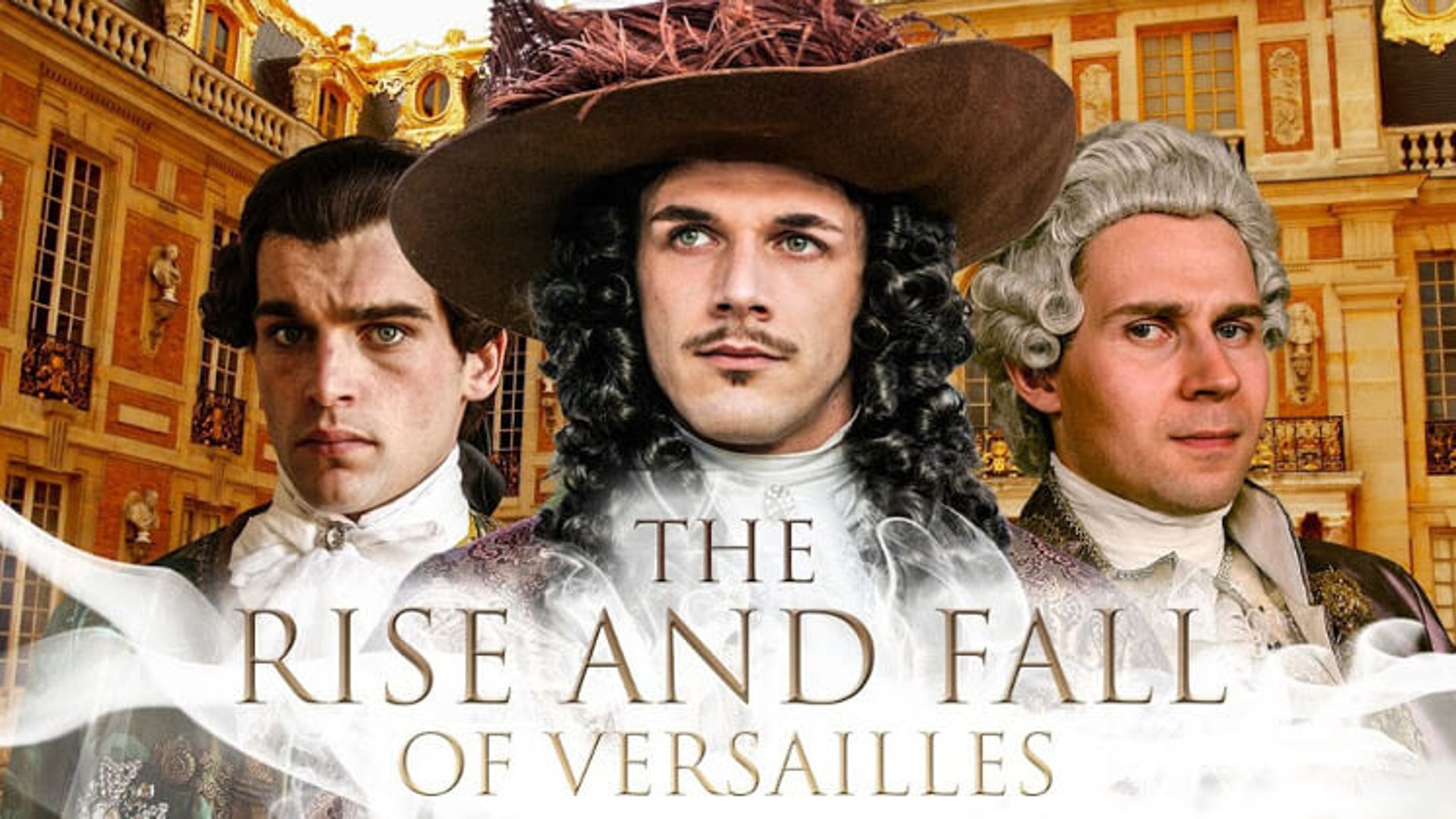





Quick facts (15)
Joan of Arc was 17 when she led the French army to victory at Orléans in 1429. She was burned at the stake at 19. The church canonized her in 1920 — nearly 500 years later.
She was the unlettered daughter of a farming family in Lorraine who claimed visions of Saints Michael, Catherine, and Margaret telling her to drive the English out of France. She somehow talked her way into the court of the disinherited Dauphin Charles, was given armour and a banner, and rode at the head of a relief army that broke the English siege of Orléans in nine days. She was captured the following year, put on trial by an English-aligned church court at Rouen, and burned for heresy in 1431. A retrial in 1456 annulled the verdict. She is now both a Catholic saint and France's secular national heroine — claimed by everyone from the political left to the far right.
La Marseillaise — France's national anthem — was written in a single night in April 1792 by an army engineer for the Army of the Rhine. It got its name from a battalion of Marseille volunteers who sang it as they marched on Paris.
Claude Joseph Rouget de Lisle, a captain of engineers in Strasbourg, wrote the music and lyrics in one night after France declared war on Austria. He never intended a national anthem — it was a marching song. A few months later, a battalion from Marseille adopted it on their march to Paris, and the song became forever associated with them. It was officially adopted as the French national anthem in 1795, banned by Napoleon and the restored Bourbons, and finally re-adopted permanently in 1879.
France used a Revolutionary calendar from 1793 to 1805 — Year I, ten-day weeks, months named for the weather. It died because workers hated only getting one day off per ten.
The Revolution rejected anything Christian, monarchical, or old — including the calendar. Year I started on September 22, 1792 (the autumn equinox and the proclamation of the Republic). Months were renamed for natural phenomena — Brumaire (mist), Thermidor (heat), Floréal (flowers). The week was 10 days long with one day off; the 365th day was a national holiday called *jour de la Révolution*. It was unpopular with farmers (it ignored saints' days that marked the agricultural year), with workers (one rest day in ten instead of one in seven), and with anyone trying to do international business. Napoleon abolished it on January 1, 1806.
The Tour de France was created in 1903 as a publicity stunt to sell more copies of a sports newspaper. It worked — circulation doubled — and the race is still on.
The newspaper *L'Auto* was losing a circulation war against a rival. A junior writer suggested staging the longest, hardest bicycle race anyone had ever attempted — six stages, 2,428 km, ridden by 60 men. The first edition almost went off the rails in a cheating scandal, but the gamble worked: race-day issues of *L'Auto* sold out, and the Tour became a fixed feature of French summer. The yellow jersey worn by the race leader is yellow because *L'Auto* was printed on yellow paper. The race passes near Paris's Arc de Triomphe every year for its final stage.
The Catacombs of Paris hold the remains of an estimated 6 million people — moved underground starting in 1786 after central Paris cemeteries overflowed.
By the late 1700s, Paris's main cemetery — Les Innocents — had been used for nearly a thousand years. The ground was raised by meters, walls were collapsing into neighbours' cellars, and the smell was a public-health crisis. The city's solution was to transfer the bones into the former limestone quarries below the city, working at night for years. The bones were artfully stacked into walls of skulls and femurs you can still walk through today.
The Eiffel Tower was meant to be temporary — built for the 1889 World's Fair and scheduled for demolition after 20 years. Radio antennas on top saved it.
The original lease was for 20 years, after which the tower was supposed to be dismantled and sold for scrap. Gustave Eiffel argued (and demonstrated) that the structure was useful for radiotelegraphy experiments, and during World War I it played a real role in intercepting German military communications. That practical utility is what kept it standing.
Léon Foucault first publicly demonstrated Earth's rotation inside the Panthéon in Paris in 1851 — by hanging a pendulum from the dome and watching its swing rotate over hours.
A 28-kilogram brass bob on a 67-metre wire was set swinging. Because the Earth turns beneath it, the plane of the swing appears to rotate over the course of a day — clockwise at Paris's latitude. It was the first direct, intuitive proof of the Earth's rotation that you could *see*. A working Foucault pendulum still hangs in the Panthéon today.
The Louvre started as a medieval fortress around 1190. You can still walk through its original stone foundations in the basement of the modern museum.
Paris Métro Line 1 opened in 1900 for the World's Fair and has run continuously ever since. It's been fully driverless since 2012.
The Mona Lisa was stolen from the Louvre in 1911 by an Italian handyman who hid it in his Paris apartment for over two years.
Vincenzo Peruggia, a former Louvre worker, walked out with the painting on August 21, 1911, hidden under his smock. The Louvre didn't notice it was missing for 26 hours. The painting was relatively obscure outside art circles before the theft; the worldwide press coverage of the missing masterpiece is what made it iconic. Peruggia was caught in 1913 trying to sell it to an Italian art dealer in Florence — he claimed (perhaps sincerely, perhaps as defence) that he wanted it returned to Italy.
Notre-Dame's stone vaults and rose windows survived the 2019 fire that destroyed the roof and spire. The cathedral reopened in December 2024.
The lead roof and 19th-century spire were destroyed. But the limestone ribbed vaults held — they were *designed* to contain a roof fire, a feature of Gothic engineering. The three medieval rose windows survived almost intact. The five-year restoration kept the silhouette identical to before the fire, including rebuilding the spire to its 19th-century design.
The Panthéon was built as a church to Sainte Geneviève. The Revolution converted it into a secular mausoleum for great citizens — Voltaire, Rousseau, Hugo, Marie Curie all rest there.
Commissioned by Louis XV in fulfillment of a vow he'd made when ill. By the time it was finished in 1790, France was in revolution, and the new National Assembly decided to repurpose the empty church. Marie Curie, interred in 1995, was the first woman buried there on her own merits.
Paris's Pont Neuf — "new bridge" — is actually the city's oldest standing bridge. Completed in 1607.
It was new in 1607 — and pioneering: the first Paris bridge without houses built on top of it, the first with pavements for pedestrians, and the first to be made of stone rather than wood. By the time anyone got around to renaming it, "Pont Neuf" had stuck for centuries.
Sainte-Chapelle was built in seven years (1242-1248) to house Christ's Crown of Thorns. Its 15 stained-glass windows tell 1,113 biblical scenes in coloured light.
King Louis IX (later Saint Louis) bought the supposed Crown of Thorns from the cash-strapped Latin emperor of Constantinople in 1238, then built Sainte-Chapelle as its reliquary. The Crown itself was moved to Notre-Dame during the Revolution; it survived the 2019 Notre-Dame fire and is now back on display. The chapel still has roughly two-thirds of its original 13th-century glass.
Building Versailles consumed an estimated 5% of France's national budget at its peak — paid for partly with debt that helped tip the country into revolution decades later.
Louis XIV moved his court from Paris to Versailles in 1682, in part to keep the nobility under his eye (and away from the political base of the capital). The palace grew over decades into the largest royal residence in Europe, with the Hall of Mirrors, the gardens of André Le Nôtre, and apartments for thousands of courtiers and servants. The construction debts and Louis XIV's foreign wars left France's finances badly weakened by the time his great-grandson Louis XVI took the throne.