Poland
Erased from the map for 123 years, rebuilt twice, and still standing.
Read more
Auschwitz and the Holocaust in Poland
1939-1945Why the Nazis built their largest extermination camp 70 km from Kraków, what happened there, and what visitors to that part of Poland are asked to remember.
How Poland disappeared from the map
1772-1918Three neighbours, three partitions, 123 years of erasure — and how the Polish nation outlasted the absence of the Polish state.
Solidarity and 1989
1978-1989How a strike in a Baltic shipyard, a Polish pope, and ten million union members took down the Eastern Bloc — mostly without firing a shot.
From the library
All Kraków library →


Quick facts (11)
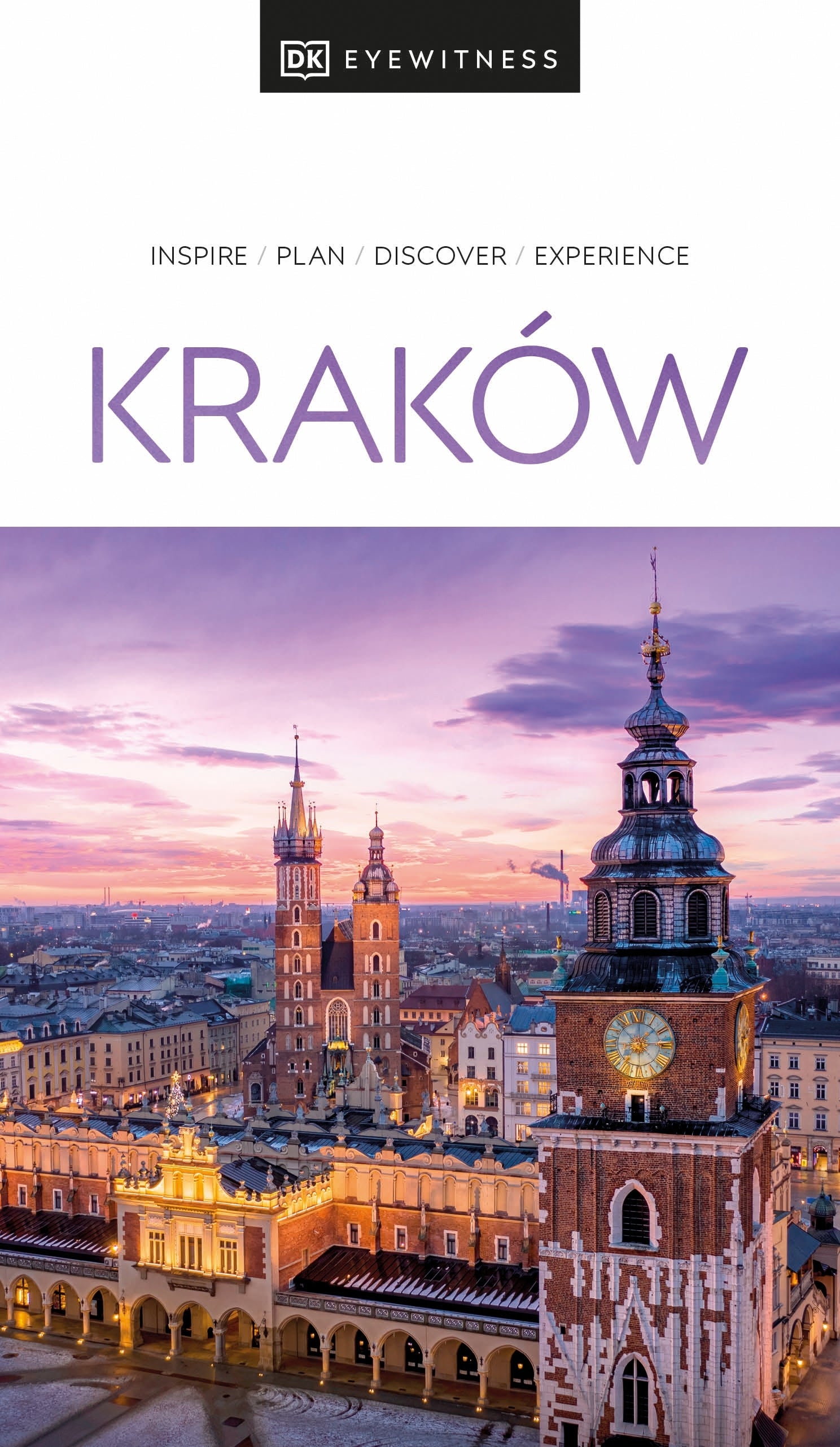
The Cloth Hall has stood in the middle of Kraków's main square since the 14th century. The vast square around it is one of the largest medieval town squares in Europe — about 200 metres on each side.
It began as Gothic stalls for the cloth trade, was rebuilt in Renaissance style after a 1555 fire, and got its current arcades in a 19th-century restoration. The upper floor now houses a branch of the Polish National Museum; the ground floor is still a covered market full of stalls selling amber, leather, and tourist crafts. The square (Rynek Główny) was laid out in 1257 after Kraków was destroyed by Mongol raids — its perfect grid is medieval urban planning, not natural growth.
A trumpet call has been played hourly from the tower of St. Mary's Basilica in Kraków for centuries — and it always ends mid-note. Legend says it commemorates a 13th-century trumpeter shot by a Mongol arrow while sounding the alarm.
The *Hejnał mariacki* is played live by a Kraków city firefighter, four times an hour — once towards each cardinal direction. The interruption is the signature: the melody simply stops on a held note. The Mongol-arrow story can't be verified historically, but the tradition is real and the noon broadcast goes out live on Polish national radio. Trumpeters take it in shifts; they have a tiny room at the top of the tower.
Kraków's Jagiellonian University was founded in 1364 — the second-oldest university in Central Europe. Copernicus studied there as a teenager.
Founded by King Casimir III the Great (only Charles University in Prague, founded 1348, is older in central Europe). Nicolaus Copernicus enrolled around 1491 at the age of 18 and spent four years studying mathematics and astronomy in Kraków before continuing his education in Italy. The original Collegium Maius still stands, with its medieval courtyard intact.
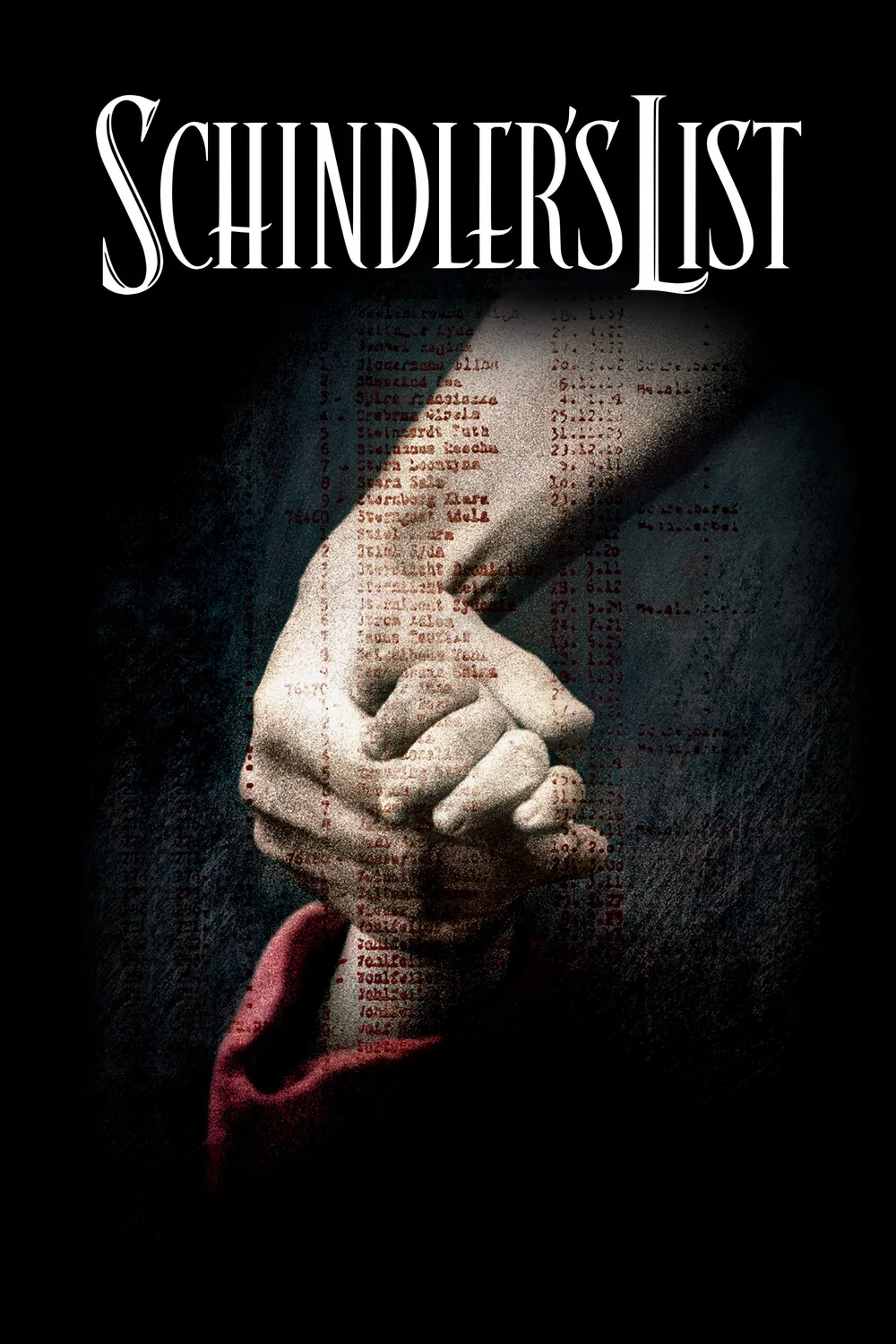
Kraków's Kazimierz district was the city's Jewish quarter for nearly 500 years before WWII. Empty after the Holocaust, it's slowly come back to life since the 1990s — partly because Schindler's List was filmed there.
Founded as a separate town in 1335 by King Casimir III the Great (who took an unusually protective stance toward Jewish refugees fleeing pogroms further west), Kazimierz absorbed Kraków's Jewish community in the 15th century. By 1939 it was one of central Europe's great centres of Jewish learning, with seven historic synagogues — five of which survived the war. The community itself did not: Kraków's Jews were forced into a ghetto across the river in 1941, and most were murdered at Bełżec, Auschwitz, or Plaszów. Today's Kazimierz is a strange mix — Jewish heritage tourism, restored synagogues, kosher restaurants, and a thriving Polish bohemian nightlife.
Oskar Schindler's enamel factory in Kraków saved approximately 1,200 Jewish workers from Nazi extermination. The building is now a museum about Kraków under occupation.
Schindler — a Sudeten German businessman and Nazi party member — initially saw the war as a chance to get rich on cheap, forced Jewish labour. Over the years, in contact with the people he employed, he changed. He bribed and manipulated SS officers to keep his workers off transports to Auschwitz, eventually moving most of them to a relocated factory in Czechoslovakia where he kept them alive until the war's end. The original Kraków factory at ul. Lipowa 4 is now a museum that focuses on the broader story of Kraków under German occupation 1939-1945.
Kraków's founding legend says a dragon lived in a cave beneath Wawel Hill, defeated by a clever cobbler who fed it a sheep stuffed with sulphur. A statue at the cave entrance breathes real fire every few minutes.
The story is folklore — first written down in the 12th century by the chronicler Wincenty Kadłubek, who attributed the trick to a king and his sons. Later versions promoted the unnamed cobbler Skuba to the hero's role. The cave beneath Wawel Hill is real and open to visitors. The bronze dragon sculpture at the cave's exit, by Bronisław Chromy, has a gas line and snorts a 6-metre jet of flame every few minutes.
Just outside Kraków, miners have been carving the Wieliczka Salt Mine since the 13th century. They didn't just dig — they sculpted chapels, statues, and an entire cathedral out of rock salt.
Salt was the medieval equivalent of oil — essential for preserving food, and royal monopoly. Wieliczka's salt income alone funded a third of the Polish state's budget at some periods. The miners worked in the dark for centuries; for spiritual comfort, they carved chapels into the salt itself. The most spectacular is the Chapel of Saint Kinga, 101 metres underground: a complete church carved from the salt, with altarpieces, statues of biblical scenes, and chandeliers made of dissolved-and-recrystallised salt crystals. Industrial salt mining ended in 2007, but the mine remains a UNESCO World Heritage site.
Poland was erased from the map of Europe for 123 years. Three partitions by Russia, Prussia, and Austria divided it up between 1772 and 1795, and it didn't exist as a state again until 1918.
In the 18th century the Polish-Lithuanian Commonwealth was one of Europe's largest states by area but politically paralysed — any single nobleman in its parliament could veto any law (*liberum veto*). Its three more autocratic neighbours simply carved it up between them in 1772, 1793, and 1795. Polish language, culture, and Catholic identity kept the nation alive through five generations of foreign rule. When Poland was rebuilt after World War I, it lasted twenty years before being invaded and partitioned again in 1939 — this time by Nazi Germany and the Soviet Union. The country only became fully sovereign again in 1989.
Polish winged hussars wore massive wood-and-feather frames on their backs into battle. Their charge at the Battle of Vienna in 1683 helped break the Ottoman siege of the city.
The "wings" — usually one or two wooden frames mounted on the back, decked with eagle, ostrich, or goose feathers — are still debated by historians. Some sources say they whistled in the wind to terrify enemy horses; others say they made it harder to lasso the rider from behind; others suggest they were largely ceremonial. What's not in dispute is that the Polish hussars were one of the most effective heavy cavalry units in Europe for nearly two centuries. At Vienna in September 1683, King Jan III Sobieski personally led the largest cavalry charge in history — roughly 18,000 horsemen, including 3,000 winged hussars — into the side of the besieging Ottoman army. The city was saved within hours.
Pope John Paul II — born Karol Wojtyła in 1920, just 50 km from Kraków — was the first non-Italian pope in 455 years. He'd worked in a Kraków quarry during the German occupation.
Wojtyła was 19 when Germany invaded Poland. To support himself and avoid deportation, he worked in a stone quarry and later a chemical plant in occupied Kraków, while secretly attending an underground seminary. He became Archbishop of Kraków in 1964 and Pope John Paul II in 1978 — the first Slavic pope, the first non-Italian since the Dutch Adrian VI in 1523. His 1979 pilgrimage to communist Poland — 13 million people came to hear him over nine days — is widely credited with helping inspire the Solidarity movement that brought down Polish communism a decade later.
Marie Curie — the first person to win Nobel Prizes in two different sciences — was born Maria Skłodowska in Warsaw. She named the element polonium after Poland, which didn't exist as a country at the time.
She grew up under Russian rule in a partitioned Poland where higher education for women was illegal. She studied in the underground "Flying University" in Warsaw before moving to Paris in 1891. With her husband Pierre, she discovered two new elements — polonium (1898) and radium (1898). Polonium was a deliberately political name: when there was no Poland on any map, she was determined that there would at least be a Polish element on the periodic table. She remains the only person to have won Nobel Prizes in two different scientific fields (Physics 1903, Chemistry 1911).