← All cities
Lucerne
Photo: Slav Yakounin · CC BY-SA 4.0
🇨🇭

Lucerne

Switzerland · CHF · Europe/Zurich

Thursday, July 23, 2026 → Saturday, July 25, 2026

The Switzerland postcard

Lucerne is small, lake-side, mountain-ringed, and absurdly photogenic. Two nights here is a chance to breathe after Paris before heading east to Prague.

Pace notes

  • The Old Town is flat and walkable.
  • Mountain trips (Pilatus, Rigi) are all-day commitments — pick one and weather-permit.
  • Switzerland is expensive — €15 sandwiches are normal. Plan for one nicer dinner per day and lunch from a grocery (Migros, Coop) the rest.

Language

Swiss German is what locals speak; standard German is what's written on signs, menus, and used in formal speech. Most Lucerners working in tourism speak excellent English. Swiss Germans are proud of their dialect — but they'll always understand standard German if you try it.

The distinctive Swiss greeting:

  • Grüezi (GREW-tsi) — Hello (the Swiss German one — try this first)
  • Grüezi mitenand (…mit-uh-NAND) — Hello, everyone (when you walk into a shop)
  • Guten Tag (GOO-ten tahk) — Hello (standard German, works fine)
  • Danke / Merci vielmal (DAHN-keh / MER-see feel-mahl) — Thanks / many thanks (the Swiss really do borrow merci from French and use it constantly)
  • Bitte (BIT-tuh) — Please / you're welcome
  • Entschuldigung (ent-SHOOL-di-goong) — Excuse me / sorry
  • Wo ist die Toilette? (voh ist dee toy-LET-eh?) — Where's the bathroom?
  • Sprechen Sie Englisch? (SHPREH-khen zee ENG-lish?) — Do you speak English?
  • Auf Wiedersehen (owf VEE-der-zayn) — Goodbye (formal)
  • Tschüss (chewss) — Bye (casual)

Switzerland has four national languages — German, French, Italian, Romansh. Lucerne is firmly in the German-speaking zone, but a 90-minute train ride west and you're hearing French.

Food & specialties

Swiss food is alpine farmhouse cooking dressed up for cafés: cheese, potatoes, bread, dried meat, and chocolate that takes itself seriously. Lucerne specifically has a few signature dishes:

  • Lucerne Chügelipastete — the city's own specialty. A flaky puff-pastry case filled with a creamy white sauce of veal, mushrooms, and sometimes raisins. Renaissance banquet food, still on traditional menus around the Reuss.
  • Älplermagronen — "Alpine macaroni": pasta, potato, cream, melted cheese, and crispy fried onions, with a side of applesauce. Old shepherd food; deeply comforting.
  • Rösti — a golden hash-brown cake of grated potatoes, pan-fried in butter. Served as a side with almost anything, or as a meal topped with a fried egg.
  • Raclette — a half-wheel of cheese melted under heat and scraped onto boiled potatoes, pickles, and tiny onions. Communal, slow, perfect on a cold mountain evening.
  • FondueMoitié-moitié is the classic: half Gruyère, half Vacherin Fribourgeois melted with white wine and garlic. (The wine cooks off; non-drinkers can absolutely partake.) Long forks, cubed bread, don't lose your piece in the pot.
  • Bündnerfleisch — air-dried beef from neighbouring Graubünden, sliced paper-thin. Common starter or a hiking snack.
  • Birchermüsli — invented by Zurich physician Dr. Bircher-Benner around 1900 as a hospital health food. Raw rolled oats, grated apple, lemon, condensed milk, nuts. Now a Swiss breakfast staple.
  • Chocolate — Switzerland industrialized milk chocolate (Daniel Peter, 1875) and invented conching (Rodolphe Lindt, 1879), the slow stirring that makes chocolate smooth instead of gritty. Lindt, Sprüngli, Toblerone, Cailler are all Swiss.

Eat your big meal at lunch — a Tagesmenü (daily menu) at a real restaurant is often half the price of the same dish at dinner.
Sites & attractions

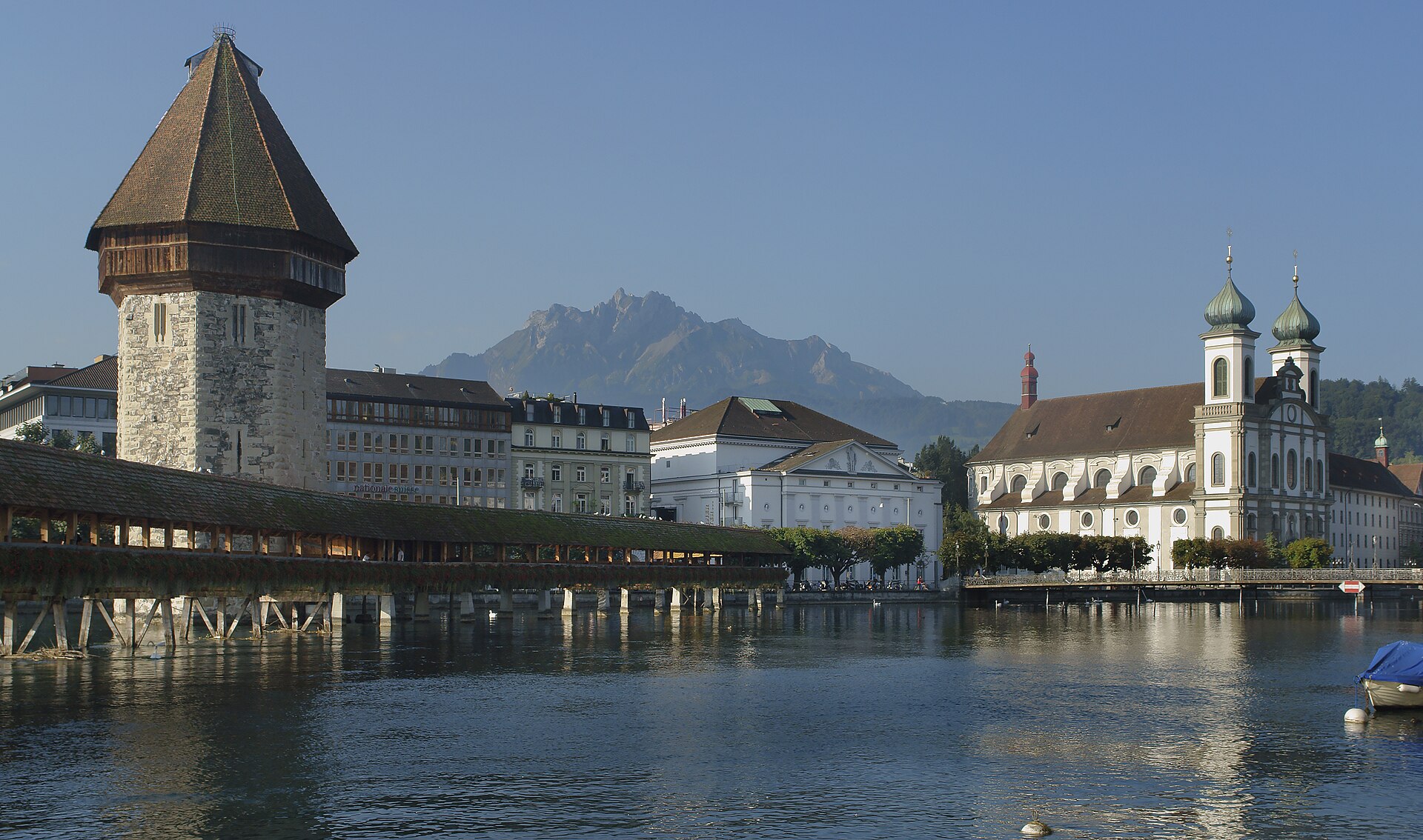
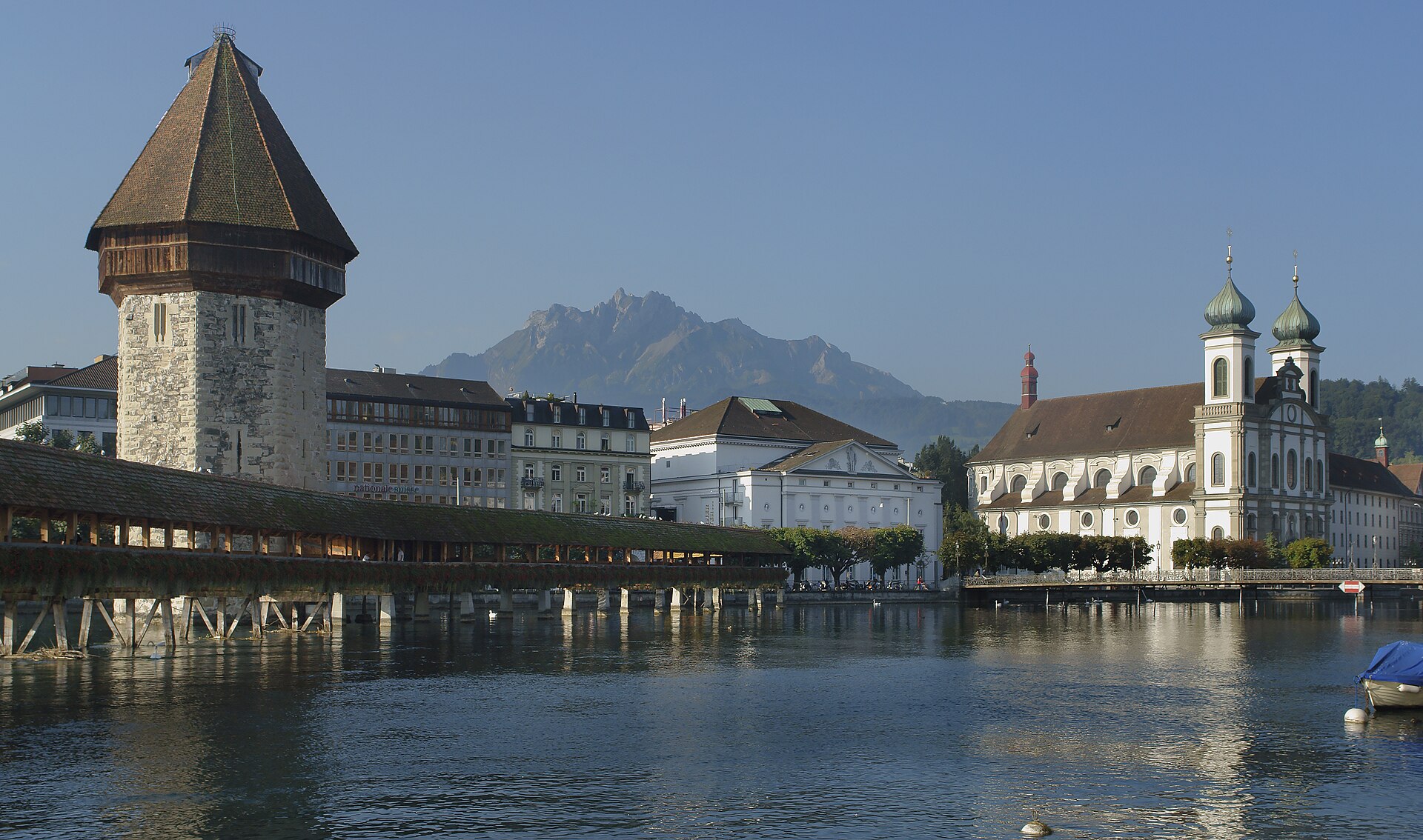
Chapel Bridge (Kapellbrücke)

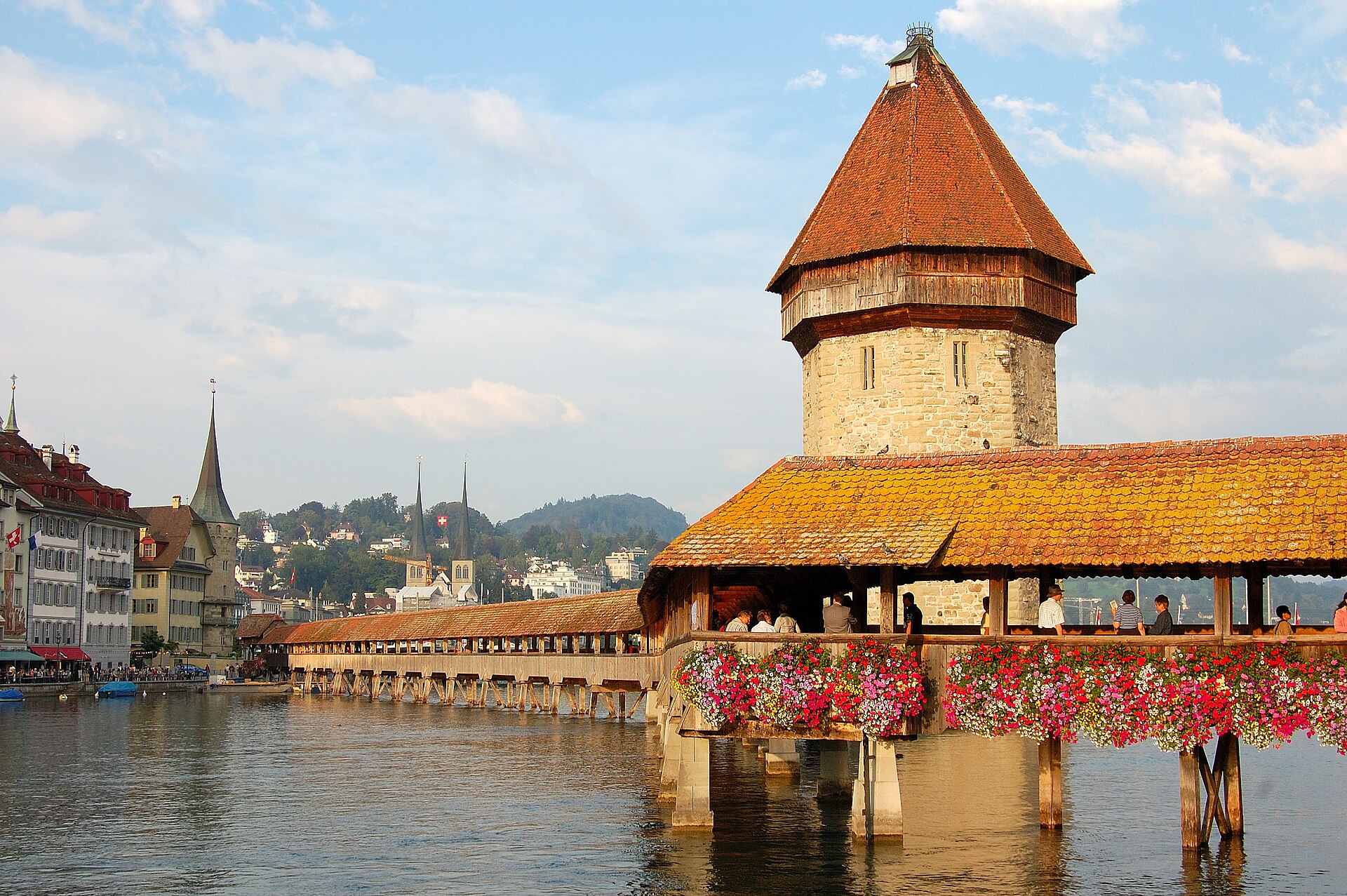
Chapel Bridge (Kapellbrücke)

The wooden covered bridge with a medieval water tower — Lucerne's icon.

Built in 1333 — among the oldest covered bridges in Europe. A 1993 fire from a cigarette dropped on a moored boat destroyed 78 of its 110 painted ceiling panels.

historyphoto spotcalm-pace
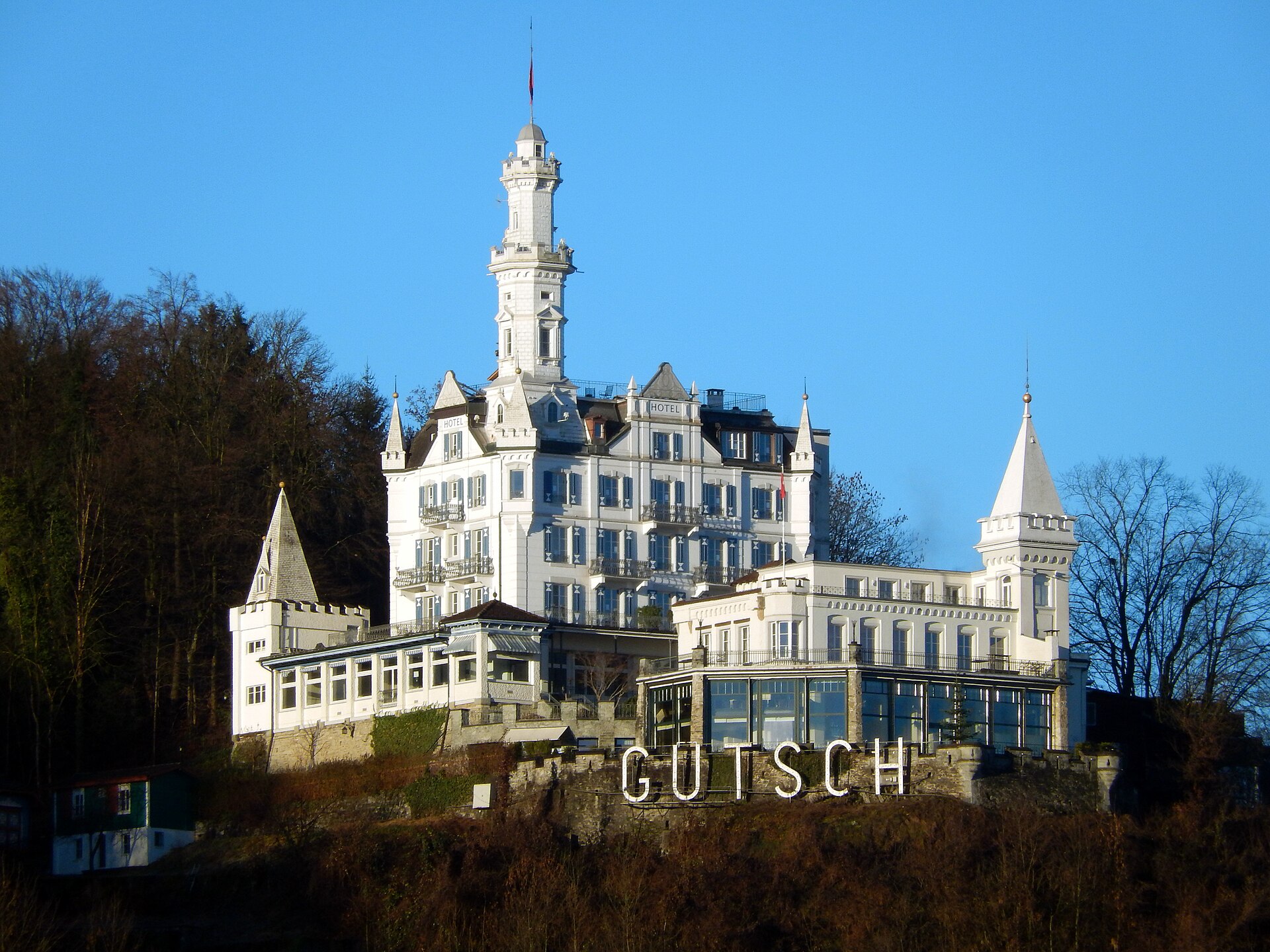
Château Gütsch

Château Gütsch

A white fairy-tale hotel-castle perched on a wooded hill above Lucerne. Ride the little funicular up for the view.

Built in 1888 as a Romantic-era hotel-folly inspired by Neuschwanstein. Queen Victoria stayed here in 1893; the funicular up to it has been running since 1884.

viewphoto spotcalm-pacekid-friendly

Confiserie Bachmann — Schwanenplatz

120-year-old Swiss chocolatier on the lakeside with a 'flowing chocolate wall' you can watch through the window.

dessertshoppingkid-friendly

Etter Distillery (Zug)

A 150-year family distillery in Zug, makers of the famous Zuger Kirsch cherry brandy. Showroom, shop, and tastings. A short train hop from Lucerne.

Cherries have been grown by Lake Zug for at least 600 years, and the first cherry distilleries appeared in 1846. Etter, founded in 1870, distils five different Kirsch spirits from local cherries alone.

schnappshistory
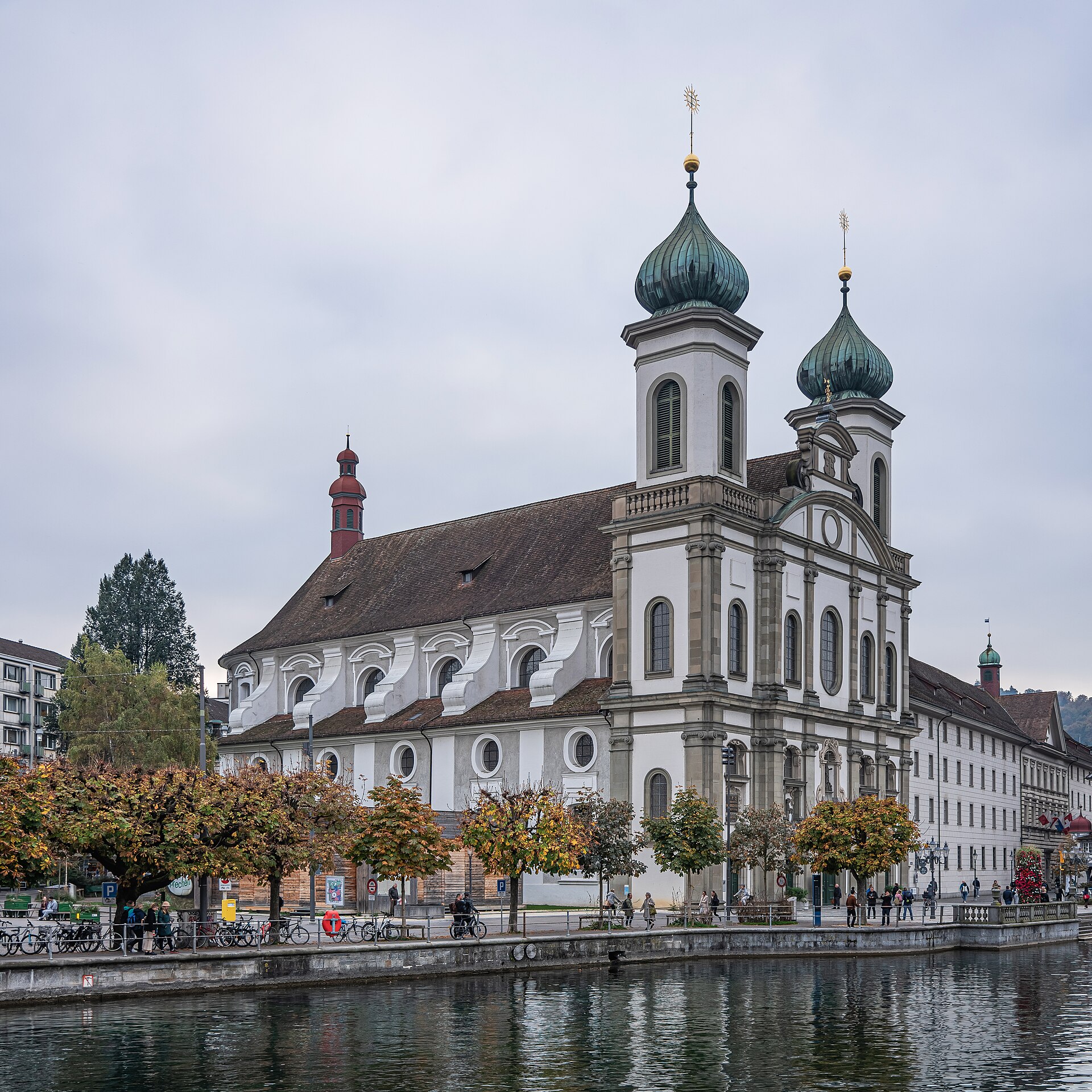
Jesuit Church (Jesuitenkirche)

Jesuit Church (Jesuitenkirche)

Switzerland's first large Baroque church (1666), with a luminous pink-and-white interior right on the Reuss.

A deliberate Catholic statement. Lucerne stayed Catholic during the Swiss Reformation and led the Catholic cantons against Zwingli's reformers in Zurich.

churchcalm-pacephoto spothistory
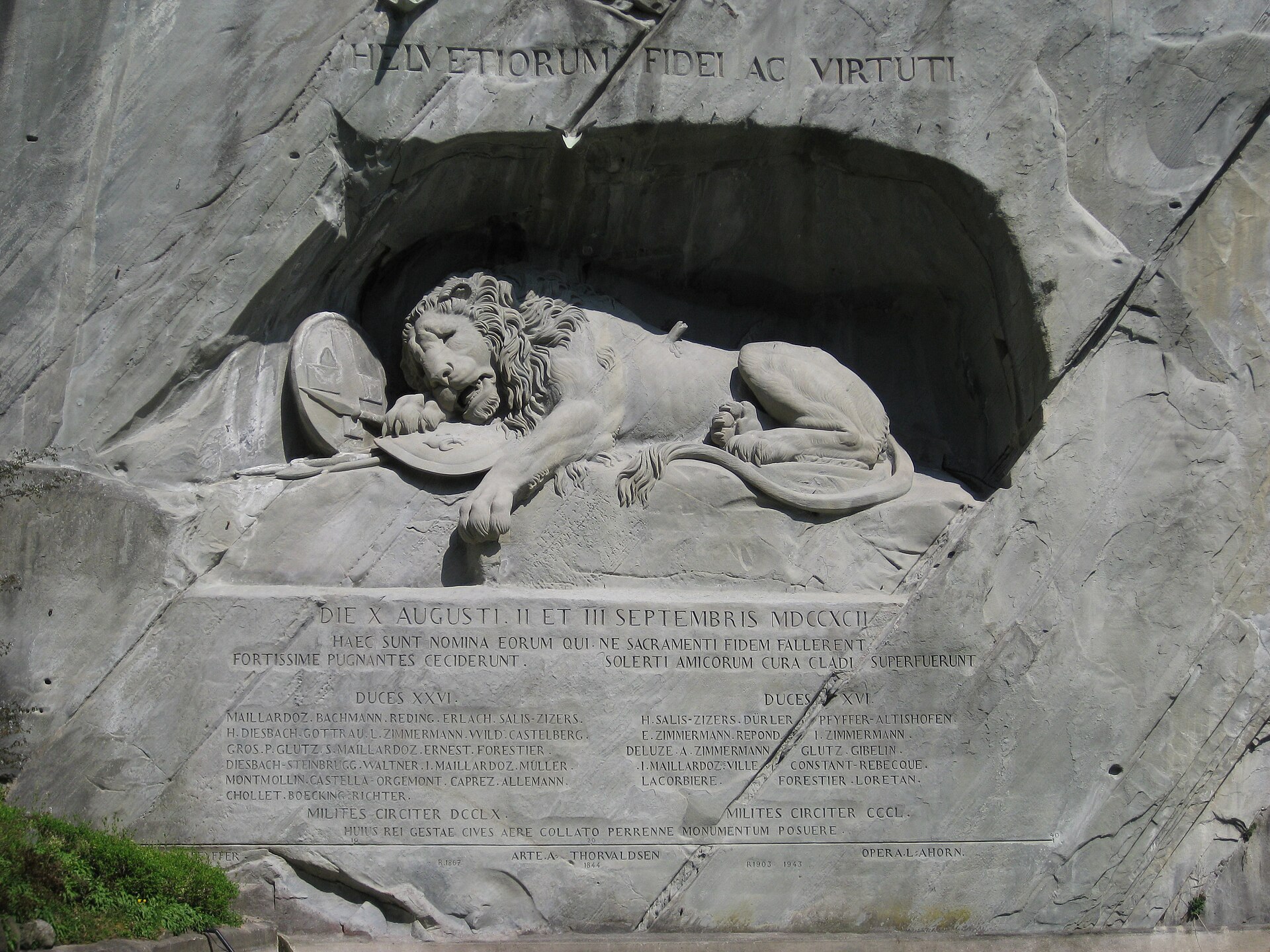
Lion Monument (Löwendenkmal)

Lion Monument (Löwendenkmal)

A ten-metre dying lion carved into a cliff face — Mark Twain called it 'the most mournful and moving piece of stone in the world.'

Commemorates Swiss Guards killed in Paris in 1792 defending Louis XVI's palace during the French Revolution. Carved into the cliff in 1820-1821.

historyphoto spotcalm-pacemust-see
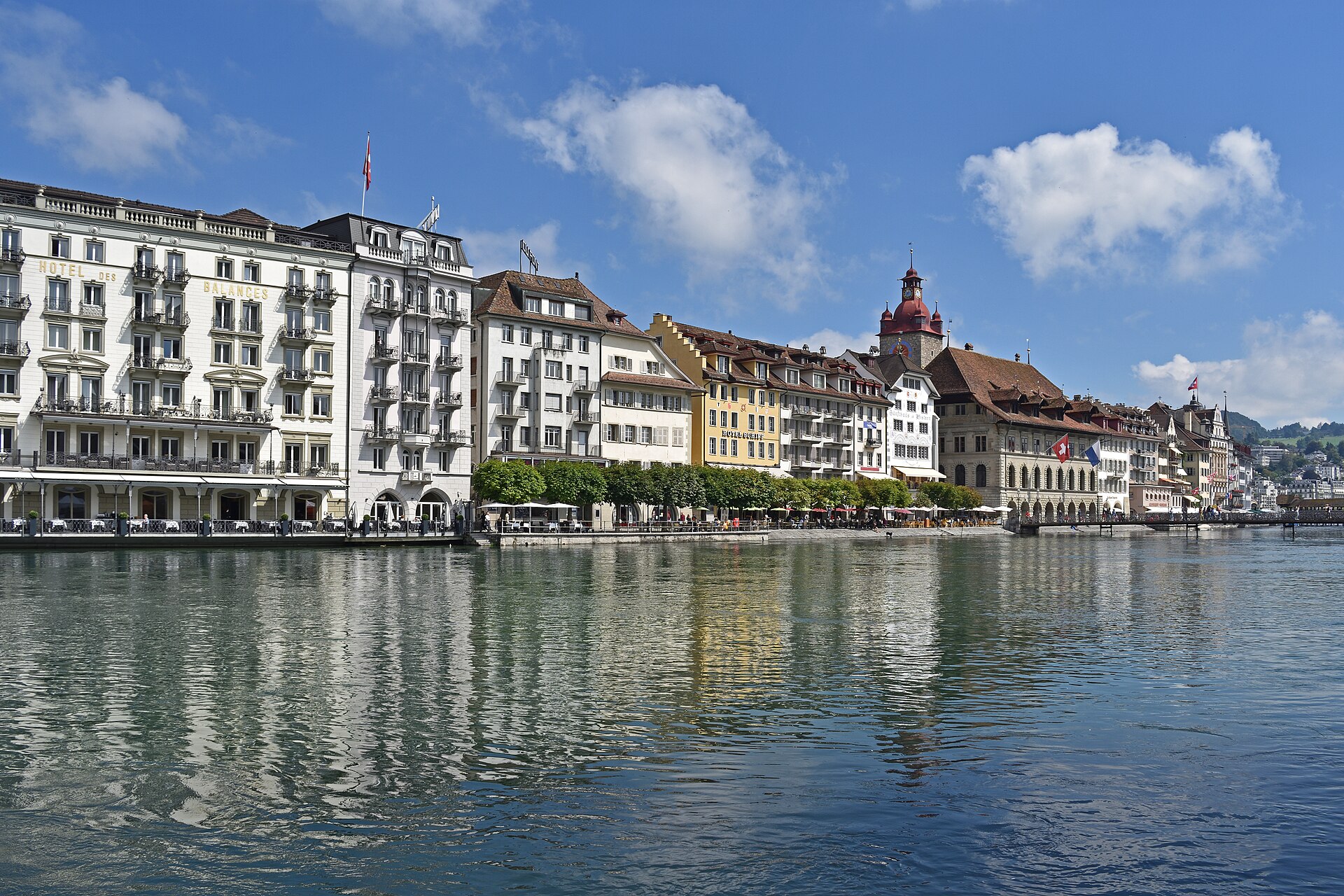
Lucerne Altstadt — frescoed squares

Lucerne Altstadt — frescoed squares

Car-free medieval old town with painted facades on Weinmarkt, Hirschenplatz and Kornmarkt — basically a walk-in fresco gallery.

Behind the painted houses, the 600-year-old Musegg Wall still stands with nine of its original towers. The clock tower strikes the hour one minute before every other clock in town.

districtphoto spotcalm-paceshopping
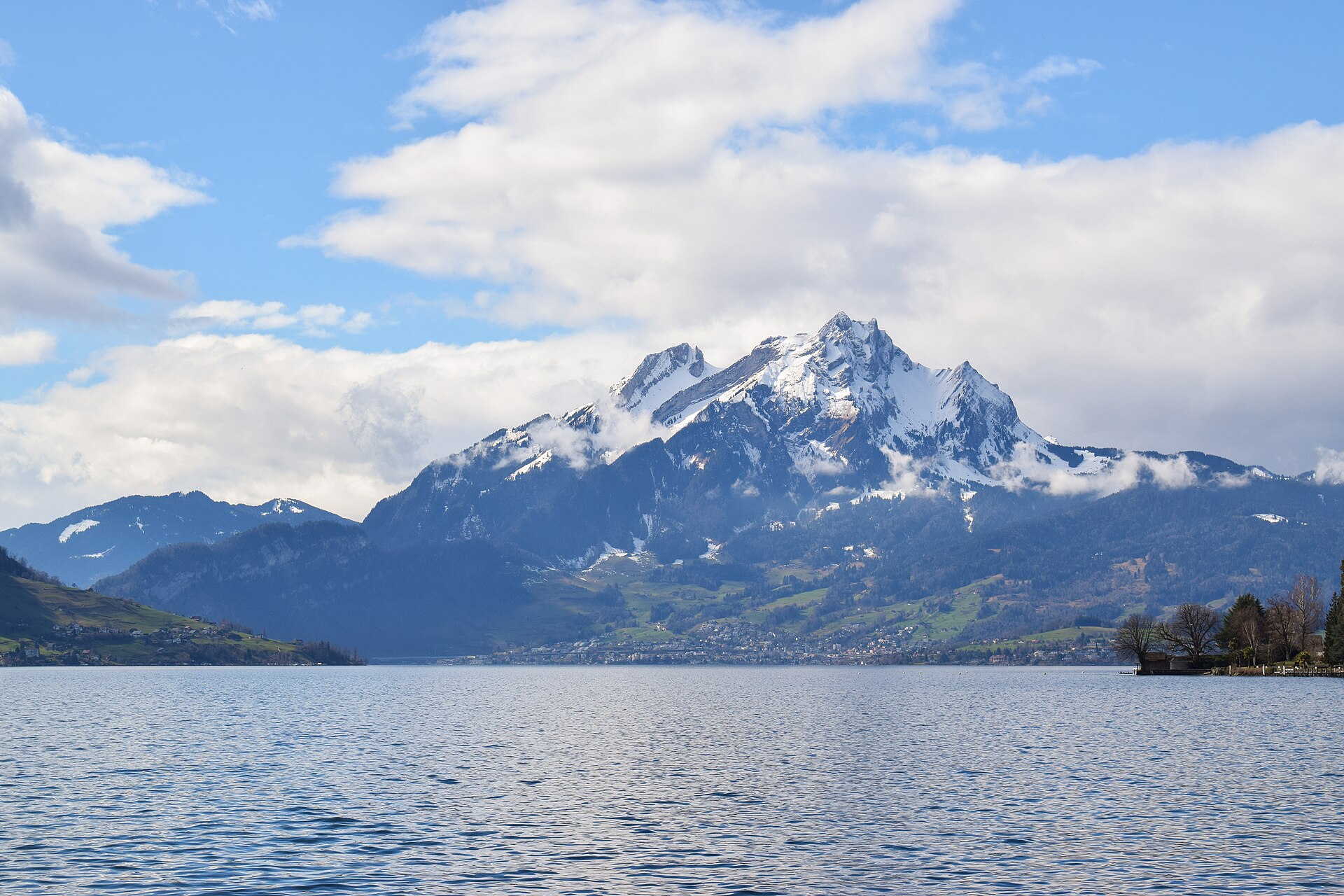
Mount Pilatus — Golden Round Trip

Mount Pilatus — Golden Round Trip

Lake boat, world's steepest cogwheel railway up Pilatus, panorama gondola down — a half-day Alpine loop from Lucerne.

Medieval Lucerners thought Pontius Pilate's ghost lived up there, blaming the storms on him. The cogwheel railway is still the world's steepest at 48% gradient.

viewmust-seephoto spotkid-friendly
Rathaus Brauerei

Rathaus Brauerei

A brewpub built into the Town Hall cellars on the Reuss, a few steps from the Chapel Bridge. Brewed on-site, with a riverside terrace looking at Pilatus.

The wort runs through a 70-metre conduit tunnelled under the old town to reach the fermentation cellar, a world first when it was built in 1998. The beer follows the 1516 purity law and is brewed with Pilatus spring water.

beerhistorydiningphoto spot

Museum Sammlung Rosengart

Three floors of Picasso and Klee — the personal collection of Lucerne dealer Angela Rosengart, who knew Picasso for decades.

museumcalm-pacephoto spot

Swiss Museum of Transport (Verkehrshaus)

Switzerland's most-visited museum — trains, planes, cable cars and a planetarium, with a chocolate experience attached.

museumkid-friendlyhistory
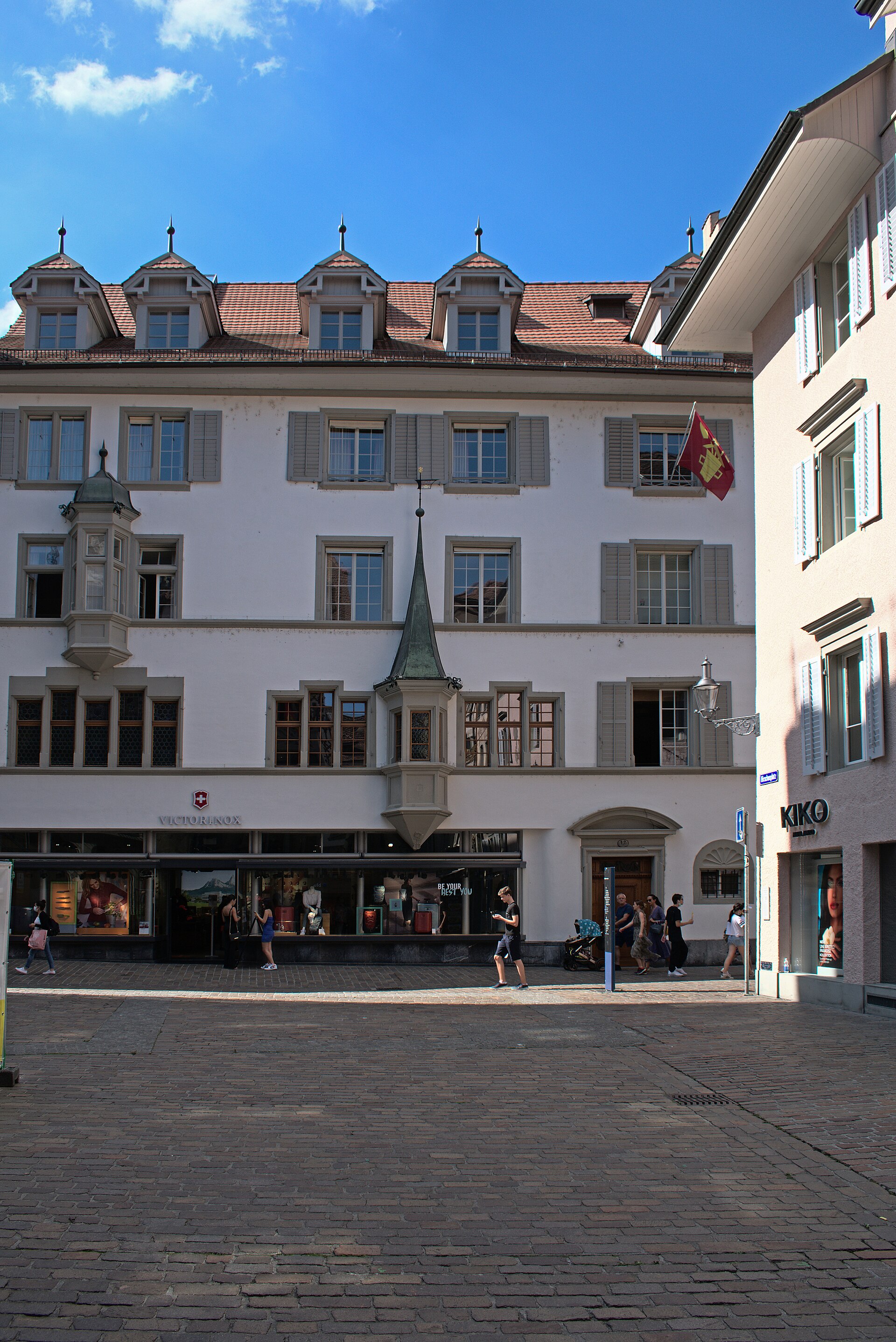
Victorinox Flagship Store

Victorinox Flagship Store

The Swiss Army Knife brand's Lucerne flagship on Hirschenplatz. Pick a knife, personalise the scales, walk out with a souvenir that actually gets used.

The name combines Victoria (the founder's mother) with inox (French for stainless steel). The rename happened in 1921 when the company switched to stainless blades.

shoppingmust-seecalm-pacekid-friendly